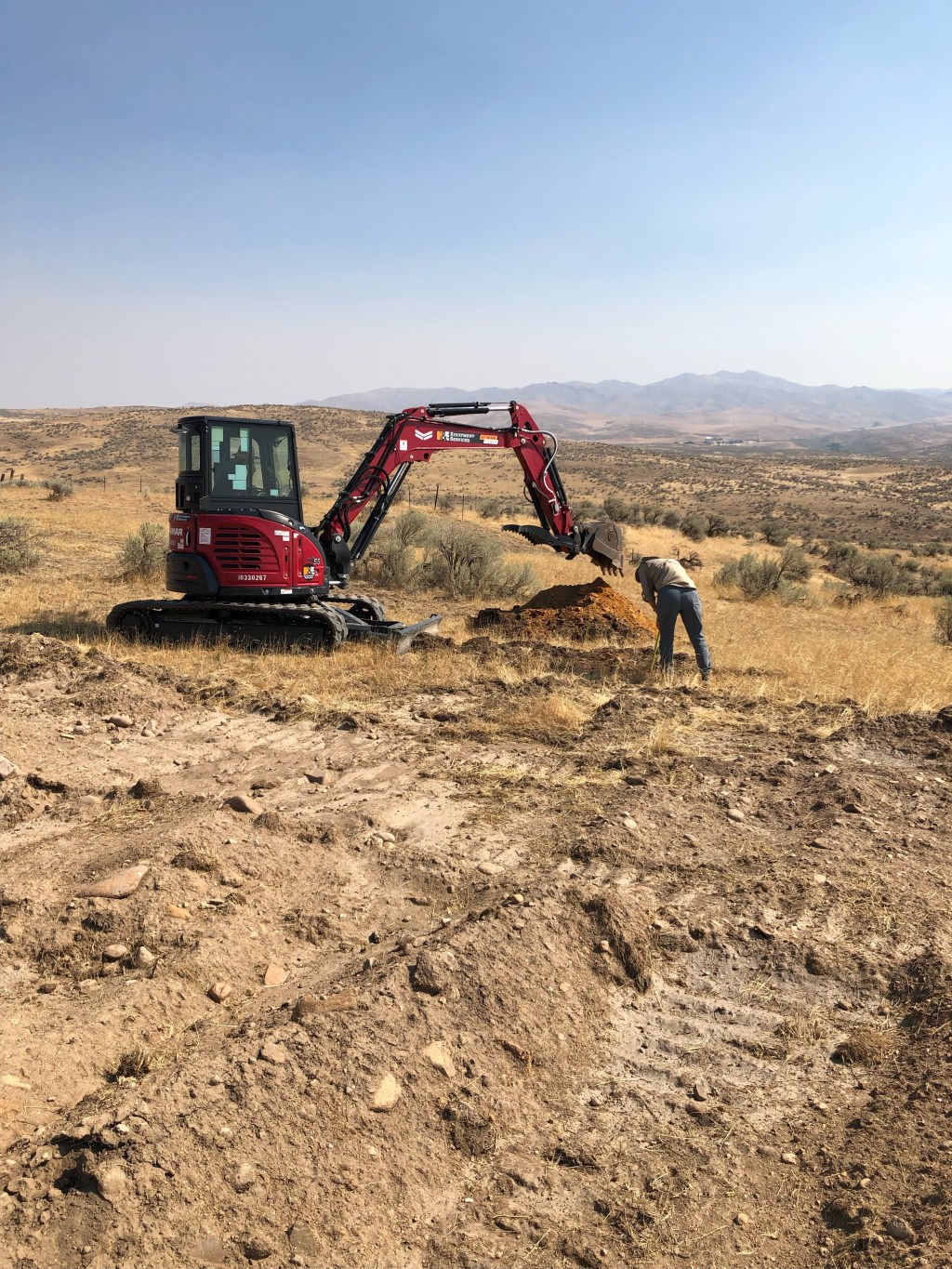
Central District Health came out yesterday for our septic/leach field test. Basically we had to dig a deep hole so the inspector could check the sediment make up to make sure it was good for a leach field.
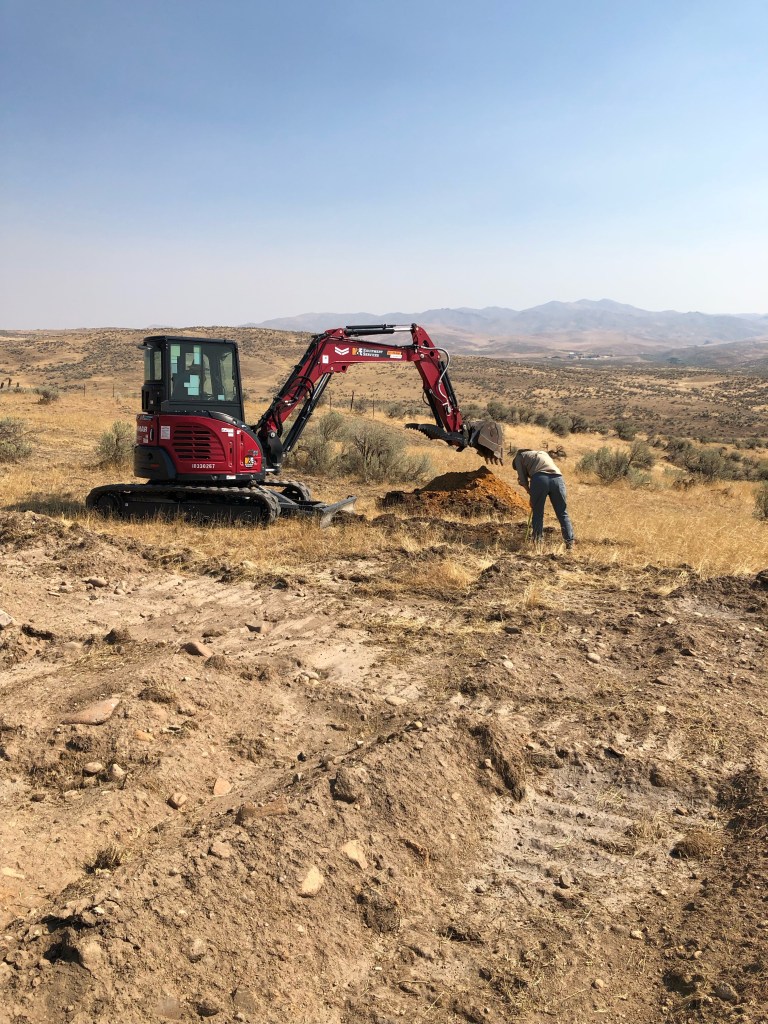
If you’re like me and understand what goes into a septic tank (💩) but that’s the extent of your knowledge, here’s how a septic tank works (and no, it doesn’t involve leeches):
Bacteria helps break everything down. The tank settles into three layers: watery waste (which makes up most of the tank), sludge (which falls to the bottom) and scum (which floats to the top and is made of fats and greases). Bacteria helps break down the watery layer, which eventually flows to the drain field. Septic tanks need to occasionally be pumped out to clear out the sludge and scum.
So – drain fields need to be able to drain and breathe, which is what the inspection was for.
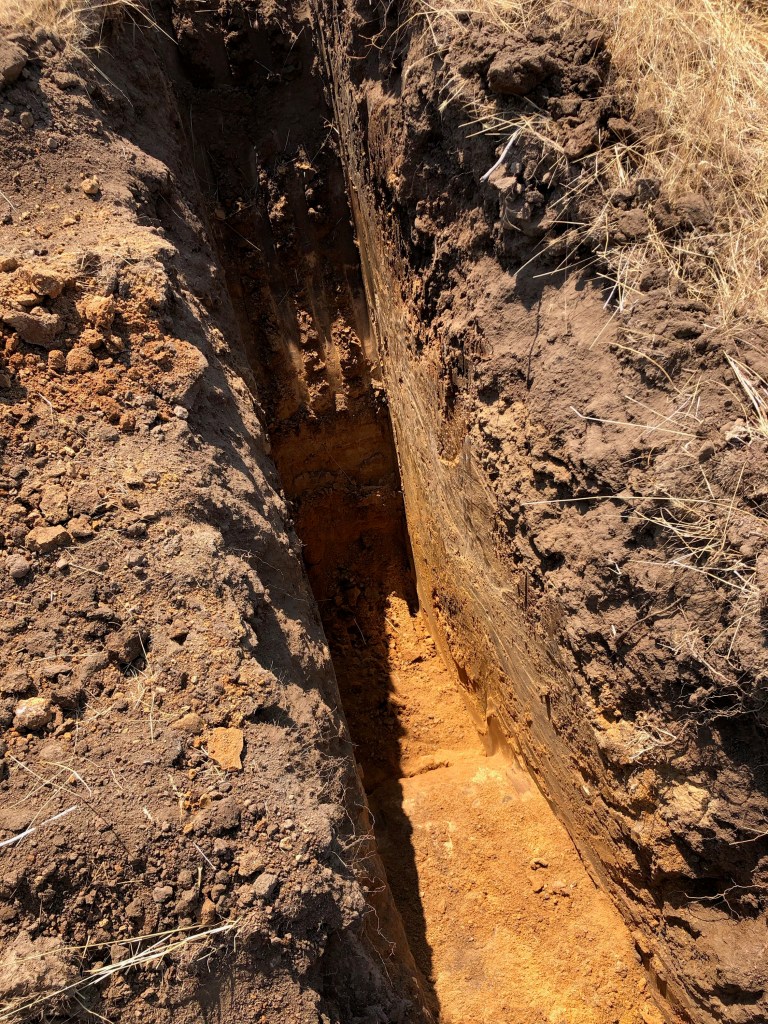
There was a scary moment where the inspector gave a weird surprised indication but said she’d never seen such a lack of rocks in a septic hole in our area. We have straight sand — great for a drain field, bad for gardening!
We will install our actual septic tank and leach field at a later date; this was just a placement test in order to move our building permit along.
 Sagebrush & Solar
Leave a comment